Neptune in Aries | Where Inspiration Meets Action
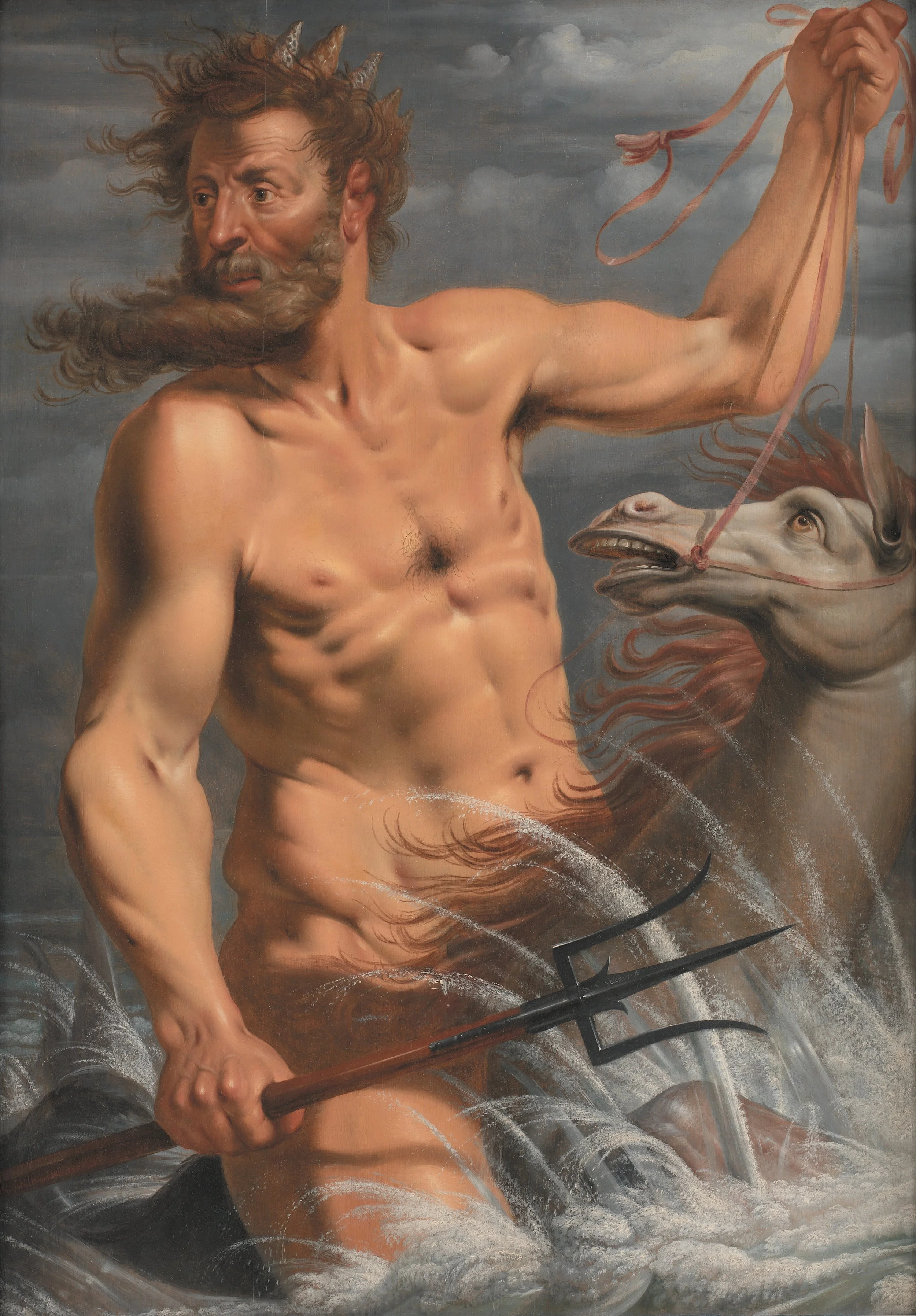
Neptune by Werner van den Valckert
We’ve got another major planetary transit, and this one has a lot to do with imagination, creativity, and dreams. Not gonna lie, when I was trying to come up with a tagline, I almost used a very George H. W. Bush–era “where wings take dream” reference often attributed to him, but figured that would mostly land with a handful of Gen-Xers despite my persistent giggling. Anyway, back to the astrology and the real reason you’re reading this. Neptune briefly dipped into Aries last year before retrograding back into its home sign of Pisces for much of 2025, but on January 26, 2026, it settles into Aries in a more sustained way. Aries is the first sign of the zodiac, the archetype of the Pioneer, and that distinction matters here. For Neptune and its influence, this marks the beginning of a new cycle that unfolds over roughly 165 years, as Neptune begins another full journey through the zodiac.
This shift doesn’t happen in isolation. There are a lot of outer planets changing signs right now. I mean, aren’t we all? But in seriousness, nearly all of the outer planets, save for Jupiter, are transitioning into new signs within a relatively short three-year window. After Pluto made its final move into Aquarius in late 2024, with Saturn preparing to enter Aries on February 13, 2026, and Uranus preparing to enter Gemini for its long-term stay in April 2026, Neptune’s move into Aries is part of a broader wave of outer-planet changes that shape the collective atmosphere rather than daily moods. In astrology, these outer planets tend to describe generational themes, and the houses they move through in a chart show where those themes take shape on a personal level.
Neptune, in particular, is one of astrology’s slowest and most mysterious planets. It governs dreams, ideals, imagination, spirituality, and illusion, and it has a way of blurring edges and softening certainty, reminding us that not everything meaningful can be proven, measured, or neatly explained. Neptune asks us to sit with ambiguity, to listen for subtle movement, and to recognize that much of what shapes our lives exists just beyond what we can clearly name.
Mythologically, Neptune takes its name from the Roman god equivalent to the Greek Poseidon, brother of Jupiter or Zeus. Poseidon is often reduced to the god of the sea, but his deeper archetype is really about what cannot be contained. Storms, undertows, earthquakes, and sudden shifts beneath what appears solid all fall under his domain. He governs forces that move faster and deeper than conscious control, the parts of life that overwhelm logic and demand humility. That symbolism matters astrologically, because Neptune is not just about beauty or spirituality. It also holds the tension between transcendence and disorientation, faith and projection, surrender and the loss of footing that can come with it.
For the past fourteen years, Neptune has been moving through Pisces, its home sign in modern astrology. Pisces is receptive, emotional, and porous, which has allowed Neptune to feel largely at home there. This era has emphasized empathy, spiritual seeking, grief, escapism, and collective sensitivity, with much of what we have been processing since 2011 happening internally rather than through direct action. We felt our way through confusion, loss, and longing, often without clear direction. Boundaries softened, old identities dissolved, and while compassion expanded, burnout and avoidance grew right alongside it. It has been a long season of feeling, like being immersed in something vast without a visible shoreline.
Now that Neptune is entering Aries, the tone shifts. Aries is associated with beginnings, survival, courage, and action, and it is ruled by Mars, the planet of will and movement. Where Pisces tends toward merging and surrender, Aries is concerned with separation, assertion, and forward momentum. Where Pisces invites us to trust the flow, Aries asks what we are willing to do with what we feel. At its core, this transit is about what happens when inspiration asks for action, and when belief demands responsibility.
When Neptune moves into Aries, it does not stop dreaming, but it does grow impatient with dreams that never leave the imagination. Ideals want expression, and spirituality becomes more visible and personal, less abstract and more embodied. This is Neptune filtered through fire, where inspiration wants a body and faith wants to be lived rather than quietly contemplated. In myth, Poseidon is also the god of horses, symbols of raw vitality, speed, and power that can carry us far beyond where our own legs would take us, but only if we know how to ride them. That detail matters here. Neptune in Aries is not just about dissolving into something larger. It is about being carried forward by it.
I also can’t help but notice what feels like an interesting synchronicity in all of this. Maybe that’s all it is. But when Neptune, named for the god of water and the creator of the horse in Greek mythology, moves into fire-ruled Aries in the same year, just weeks shy of the Chinese astrological New Year of the Fire Horse, the symbolism feels a bit more weighted. Across traditions, the horse is associated with speed, vitality, power, and momentum, and fire intensifies whatever it touches. I’m not suggesting these systems are causally linked, but as someone who studies myth, mysticism, and symbolic language, I pay attention when different frameworks echo similar themes at the same time. Whether you see it as coincidence or meaningful resonance, it reinforces the sense that this moment is about movement, ignition, and forces that can carry us faster than we might expect.
Back in the realm of Western astrology, Mars does not make Neptune clearer so much as it makes it louder. Neptune still blurs the line between truth and fantasy, and Aries still moves quickly. Together, they can inspire real courage and creativity, but they can also blur the line between intuition and impulse, which is where discernment becomes essential. Neptune in Aries can motivate people to stand up for what they believe in, but it can also amplify hero narratives, propaganda, and belief-driven force. Psychologically, this is the risk of acting on an idea before it has been fully examined. This transit asks not just what we believe, but what our beliefs compel us to do once they are set in motion.
From my own vantage point as an intuitive astrologer, I also notice that when a slow, outer planet enters a cardinal sign, Aries, Cancer, Libra, or Capricorn, people with those signs prominent in their charts often feel the shift more directly or earlier. That does not mean other signs are unaffected. Cardinal signs are simply associated with beginnings and movement, which means they tend to register change sooner. If you have Aries, Cancer, Libra, or Capricorn placements, especially your Sun, Moon, Rising sign, or personal planets, those are worth paying attention to, since Neptune entering Aries activates the Aries-ruled house in your chart and points to where this long reimagining is unfolding for you personally.
Neptune in Aries does not promise clarity or comfort. What it offers instead is an invitation to act with awareness, to let imagination fuel courage without surrendering discernment, and to participate consciously in shaping what comes next, even when the outcome is not guaranteed. Over the next fourteen to fifteen years, this transit asks us to stop waiting for certainty and start living our values, trusting what moves us while taking responsibility for where that movement leads. When used well, Neptune in Aries supports creative risk, spiritual independence, and the courage to build something meaningful from a vision that once lived only inside you. The work is not to rush or crusade, but to move with intention, allowing inspiration to guide your choices while discernment keeps you grounded in what you are creating.