The Autumn Equinox & Traditions Around the World
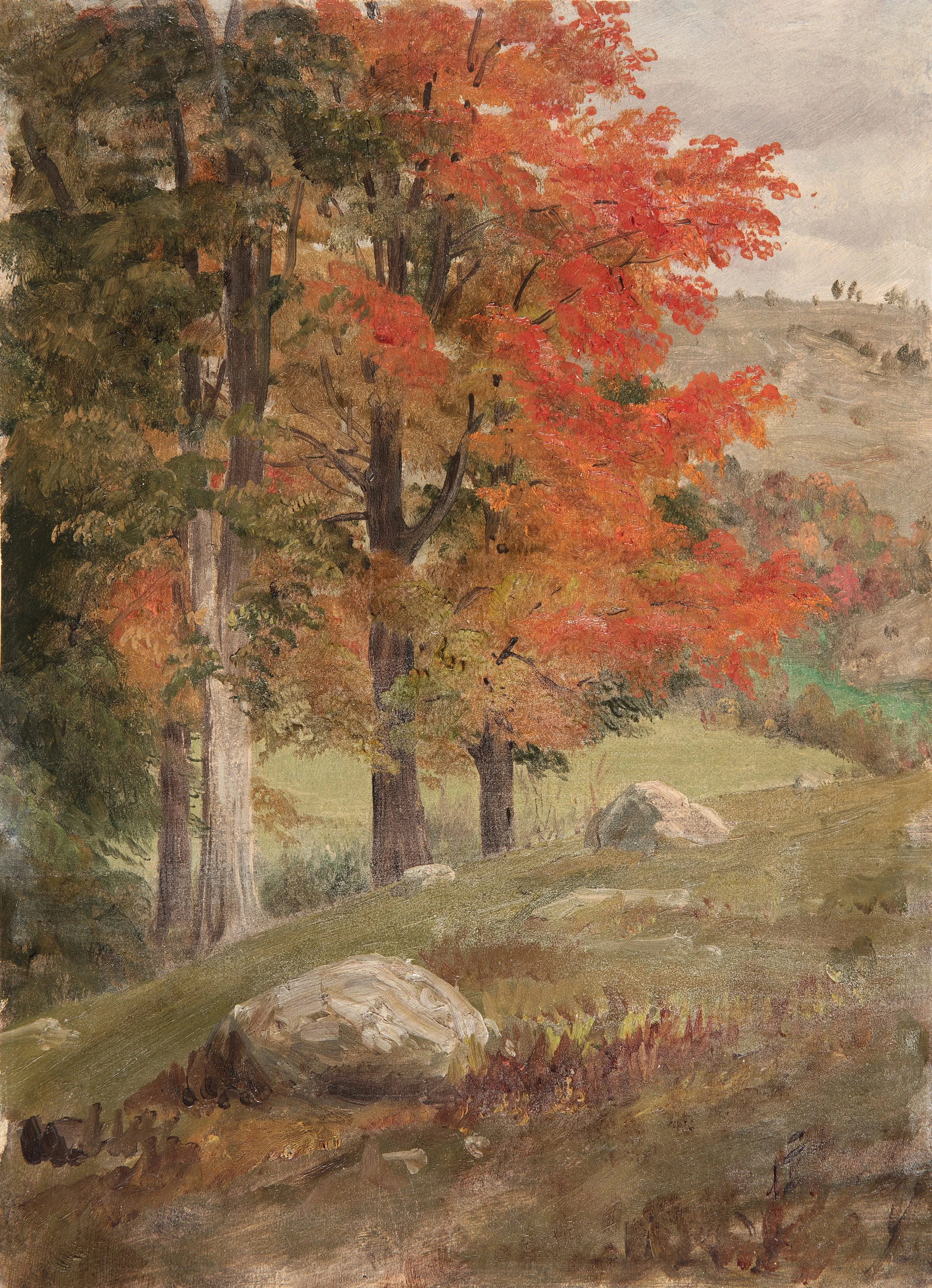
Autumn in the Woods by Frederic Edwin Church
The Autumn Equinox marks a moment when light and darkness are in almost perfect balance before darkness begins to win in the Northern Hemisphere and light triumphs in the Southern. Since I’m in the Northern Hemisphere, that means cooler weather, shorter days and earlier bedtimes. At least, that’s the idea. It’s been hot, humid and in the 80s for most of September, so I’m hoping the Equinox also marks a shift toward actual fall weather and I would love for the weather to start matching the mood.
Astronomically, the Equinox occurs when the Sun crosses the celestial equator, which happens twice each year, around March 20th or 21st and September 22nd or 23rd. The word comes from the Latin aequus, meaning equal, and nox, meaning night. Day and night aren’t technically exactly equal on the Equinox because of the way we measure sunrise and sunset and the effects of atmospheric refraction, but they’re close enough that humans have been associating the Equinox with balance for a very long time. After the September Equinox, daylight continues to decrease in the Northern Hemisphere until the Winter Solstice, while the opposite happens in the Southern Hemisphere.
Humans have been watching these changes in the Sun for thousands of years, long before we had clocks and calendars telling us when fall officially begins. For agricultural societies, understanding the seasons was necessary for survival. The movements of the Sun, Moon and stars helped people understand when to plant, harvest, gather and preserve food and prepare for winter, so it’s not surprising that these seasonal turning points became intertwined with mythology, religion and ritual.
Libra and the Balance of the Equinox
In tropical Western astrology, the Autumn Equinox is also the moment when the Sun enters Libra. The zodiac begins at the Spring Equinox with Aries, so Libra sits exactly opposite Aries on the zodiac wheel and begins at the opposite equinox. This places the two signs at the two points in the year when light and darkness come closest to balance.
Libra is symbolized by the scales and traditionally associated with balance, harmony, fairness, relationships and our ability to consider more than one side of something. It’s also the only sign of the zodiac represented by an inanimate object rather than a person or animal, which feels particularly appropriate for a sign concerned with weighing and measuring.
The balance of the Equinox is brief. The Sun doesn’t arrive at perfect equilibrium and stay there. It crosses a threshold, and almost immediately the balance begins shifting again. In the Northern Hemisphere, darkness takes the lead and continues gaining ground until the Winter Solstice. In the Southern Hemisphere, light does the same.
I like this understanding of balance more than the idea that balance means somehow arranging our lives so everything receives an equal amount of time and energy. Nature doesn’t maintain perfect balance either. There are seasons of growth and activity and seasons of rest and retreat, and the balance comes from allowing both to exist within the larger cycle.
The Wheel of the Year
Today, many modern people understand these seasonal changes through the Wheel of the Year, an annual cycle of eight festivals marking the movement through the seasons. The Wheel includes the Winter and Summer Solstices, the Spring and Autumn Equinoxes, and the four traditional Gaelic seasonal festivals of Imbolc, Beltane, Lughnasadh and Samhain.
Although its individual parts have much older histories, the eight-part Wheel of the Year as we know it today developed during the modern Pagan revival. Wiccan and modern Druid traditions brought the solstices, equinoxes and older seasonal festivals together into one continuous cycle. It isn’t an ancient Celtic calendar preserved intact for thousands of years, but a modern way of organizing a collection of much older astronomical, agricultural and spiritual traditions.
The symbolism of the Wheel is easy to understand because we can watch it happening around us. Spring brings increasing light and new growth, summer reaches its peak in warmth and abundance, autumn brings harvest and decline, and winter brings darkness and dormancy before the cycle begins again. Modern Pagan traditions use those physical changes in the natural world as a framework for understanding similar cycles of growth, abundance, release, rest and renewal in our own lives.
Mabon
Mabon is the modern Pagan celebration associated with the Autumn Equinox. The name comes from Mabon ap Modron, a figure in medieval Welsh mythology who appears in the collection of stories commonly known as the Mabinogion. In Culhwch and Olwen, Mabon is taken from his mother when he is only three nights old and remains missing until Arthur’s companions undertake a long search to find and free him.
Despite the age of the mythology, there is no evidence that ancient Celtic peoples celebrated the Autumn Equinox as a holiday called Mabon. The name was applied to the Equinox during the modern Pagan revival. American Pagan writer Aidan Kelly has described choosing the name Mabon in the 1970s while developing names for the modern Pagan calendar, drawing it from the Welsh mythological figure.
Modern Mabon has become a celebration of harvest, gratitude, balance and preparation for the darker part of the year. Seasonal foods, apples, grapes, grains, pumpkins, leaves and other symbols of the harvest often appear on altars and tables, while celebrations can include feasting, offerings, spending time outdoors and recognizing what has come to fruition over the previous months.
Mabon may be a modern holiday, but it sits within a much older human tradition of recognizing seasonal change. Different cultures have celebrated the Equinox itself, the harvest surrounding it or the autumn full moon in very different ways, each shaped by its own landscape, religion, mythology and history.
Celebrating the Season Throughout History
Long before Mabon became the modern Pagan name for the Autumn Equinox, people were marking the changing agricultural year in different ways. Some traditions were directly connected with the Equinox, while others followed the Moon, the harvest or the ripening of an important crop. They weren’t different versions of the same celebration, but they grew from the same basic human practice of watching the natural world and organizing life around its cycles.
Later Christian traditions in Britain and Ireland marked another important point in the agricultural year with Michaelmas, the Feast of Saint Michael and All Angels, on September 29th. By the Middle Ages it had become associated with the completion of harvest and was one of the traditional quarter days when rents were paid, leases began or ended, workers were hired and accounts were settled. Feasting was common, and goose became particularly associated with the holiday.
In ancient Greece, autumn was closely associated with Demeter and Persephone, whose mythology became intertwined with agriculture and the cycles of growth, disappearance and return. The Greater Eleusinian Mysteries were celebrated at Eleusis during the autumn and became some of the most important religious rites in the ancient Greek world. Initiates participated in ceremonies honoring Demeter and Persephone, although exactly what happened during the most sacred portions remains unknown because initiates were forbidden from revealing them. The Greeks also celebrated the Thesmophoria, another festival dedicated to Demeter and Persephone and particularly associated with agriculture, fertility and the continuation of life. So many ancient festivals and traditions show just how much we all have in common, with the agricultural transition toward winter becoming connected with stories of loss, descent and eventual return.
The ancient Iranian festival of Mehregan has a more direct historical relationship with the Autumn Equinox. Named for Mehr, or Mithra, it became an important autumn festival associated with harvest, gratitude, friendship and social bonds. Modern celebrations in Iran and Tajikistan can include tables filled with seasonal fruits, grains and other foods, along with prayers, music, dancing and feasting. Its traditions have changed during its very long history, but gratitude for the harvest and gathering together as a community remain central. In 2024, UNESCO inscribed the Ceremony of Mehregan on its Representative List of the Intangible Cultural Heritage of Humanity.
Around this same part of the year, Hindu traditions include Pitru Paksha, a period devoted to remembering and honoring ancestors. Its dates are determined by the Hindu lunar calendar rather than the Equinox itself, and the observance traditionally lasts for sixteen lunar days. Families perform rites known as shraddha and make offerings of food and water to departed relatives, expressing gratitude toward ancestors and recognizing the continuing relationship between generations.
Sharad Navratri follows during the autumn festival season and celebrates the divine feminine over nine nights. The festival is observed in many different ways across India, reflecting regional traditions as well as different forms and stories of the Goddess. Durga is particularly important during Sharad Navratri, and celebrations may include fasting, prayer, music, dancing, elaborate displays and community gatherings. In many traditions, the festival culminates in celebrations of the triumph of the Goddess over destructive forces, making protection, renewal and the victory of good over evil important themes.
In Telangana, Bathukamma is celebrated during this same autumn festival season. Women create elaborate arrangements from seasonal flowers and gather to sing and dance around them before the flowers are eventually carried to water. The celebration is closely connected with the seasonal flowers and landscape of Telangana, making the natural world itself part of the ritual rather than simply using an astronomical date to mark the season.
China’s Mid-Autumn Festival, also known as the Moon Festival, follows the lunar rather than solar calendar and is celebrated on the fifteenth day of the eighth lunar month, when the Moon is full. It developed into an important celebration of harvest, family, reunion and abundance. Families and friends traditionally gather to admire the Moon, share mooncakes and spend time together. The roundness of the full Moon became associated with completeness and reunion, and the festival is also connected with stories of Chang’e, the Moon goddess.
Vietnam celebrates Tết Trung Thu during the same full Moon of the eighth lunar month. Although it shares older lunar and agricultural connections with other East Asian autumn festivals, it developed its own traditions within Vietnamese culture and has become especially associated with children and family. Lantern processions, lion dances, mooncakes, fruit displays and gatherings beneath the full Moon are familiar parts of the celebration.
Korea’s Chuseok also occurs around the full Moon of the eighth lunar month and is one of Korea’s most important traditional holidays. It is closely connected with harvest, family and honoring ancestors. Families traditionally gather, prepare seasonal foods and perform ancestral rites expressing gratitude and respect. Songpyeon, small rice cakes traditionally filled with ingredients such as sesame, beans or chestnuts, are closely associated with the holiday, along with family gatherings and visits to ancestral graves.
Japan’s Higan has one of the clearest relationships with the Equinox itself. It is observed around both the Spring and Autumn Equinoxes and is rooted in Japanese Buddhist tradition. During autumn Higan, many people visit and clean family graves, leave flowers and offerings and remember deceased relatives. The word higan refers to the “other shore,” a Buddhist idea associated with crossing from the world of suffering toward enlightenment. Around the Equinox, the Sun rises approximately due east and sets approximately due west, and the western direction became associated in Japanese Pure Land Buddhism with Amida Buddha’s Pure Land.
Across North America, Indigenous nations developed seasonal ceremonies according to the plants, animals, agricultural cycles and landscapes of the places where they lived. Among several peoples of the Southeast and Eastern Woodlands, Green Corn ceremonies developed around the ripening of maize and became important occasions for community gathering, thanksgiving, renewal and the beginning of a new agricultural cycle. The exact ceremonies, timing and meanings differ between nations, and they don’t correspond neatly with the astronomical Equinox. Among the Hopi, corn is similarly central to both everyday and ceremonial life, with harvest dances and ceremonies tied to relationships with corn, rainfall, land and community.
Farther south, the Maya left extraordinary evidence of careful observation of the movement of the Sun. At Chichén Itzá in present-day Mexico, El Castillo, or the Temple of Kukulcán, interacts with sunlight around the spring and autumn equinox periods in a particularly dramatic way. As the Sun lowers, light and shadow create triangular shapes along the northwest staircase that appear to join the carved serpent head at its base, creating the impression of a serpent moving along the pyramid. The effect develops across a period of days rather than occurring only at the exact astronomical Equinox, but it demonstrates the sophisticated astronomical and calendrical knowledge incorporated into Maya architecture.
In parts of West Africa, the arrival of the yam harvest is marked with New Yam festivals, particularly among Igbo communities in Nigeria and neighboring regions. The timing follows the agricultural cycle rather than the September Equinox, but the festival marks the arrival of the new crop and the transition between agricultural cycles. Traditionally, the new yams are ceremonially acknowledged before they are eaten, and celebrations can include offerings, prayers, feasting, music, dancing and sharing food with family and community.
Among the Ga people of Ghana, Homowo is another harvest festival rooted in the relationship between agriculture, history and community. The name is commonly translated as “hooting at hunger” and recalls a period of famine and the abundance that followed when rains and successful harvests returned. The festival includes the preparation of kpokpoi, a traditional maize dish, along with family gatherings, remembrance of ancestors, music and dancing. The harvest becomes both a celebration of abundance and a collective memory of surviving scarcity.
Taken together, these traditions show how differently people have responded to the same basic experience of living within natural cycles. Some followed the Sun, others followed the Moon, and others followed the arrival of a particular crop or the seasonal rhythms of the place where they lived. Harvest, family, ancestors, gratitude, survival, death and renewal appear again and again, but each tradition developed its own language, stories and practices around them.
The Equinox Today
Looking across these traditions, what stands out isn’t that ancient cultures were all secretly celebrating the same holiday under different names. They weren’t. Some traditions follow the Sun, some follow the Moon, some follow agricultural cycles, and some are connected primarily with ancestors, gods, family or community.
What they share is the very human habit of paying attention to where we are in time and noticing what the natural world is doing around us. People watched the Sun move across the sky, noticed when particular plants ripened, gathered crops, stored food, remembered their ancestors and created stories and rituals that made those changes meaningful.
Modern Mabon belongs to that much larger history even though the holiday itself is relatively young. The Autumn Equinox gives us a moment when light and darkness briefly meet before the balance shifts again, which brings me back to Libra and the scales. Balance doesn’t have to mean keeping everything perfectly even. Sometimes balance is simply recognizing which season we’re in and allowing ourselves to move with it.