Full Moon in Aquarius
Full and New Moons have become one of my favorite ways to mark the passage of time through one of our oldest symbolic systems: astrology. Roughly every two weeks they arrive, an ebb and flow, almost like a conversation with time itself, asking us to stop long enough to notice what has changed. Sometimes our hard work begins to pay off. Other times, our avoidance finally catches up with us. Either way, they have a way of showing us what only time can.
This July has felt particularly dense, heavy and at times, overwhelming, and somehow both incredibly fast while also feeling strangely slow. I feel like I’m caught in some strange vortex and I can’t quite get my bearings. The astrology has been unusually active, but even if you don’t follow planetary movements, you may have felt the same thing as those of us clocking the planets in other ways: a sense that something is shifting beneath the surface, old questions resurfacing, relationships changing shape, or simply the feeling that you’re standing at the edge of something new. If you’ve been hoping for a little clarity before turning the page to August, the Full Buck Moon may offer exactly that. Whether we recognize it or not is another story.
Every Full Moon exists in relationship with its opposite sign, creating a natural tension that asks us to find balance. This month’s Buck Moon falls in Aquarius during Leo season on Wednesday, July 29th. Leo, the fire sign symbolized by the lion, is often associated with identity, creativity, confidence, and the desire to express ourselves. Aquarius, the air sign opposite Leo, turns our attention outward toward community, innovation, shared ideals, and the future. Like all zodiac signs, they’re far more nuanced than a few keywords could ever capture, but those themes give us a good place to begin.
My approach to astrology is less about prediction and more about perspective. It’s an ancient framework for understanding both the world around us and our place within it. I’ve heard skeptics dismiss it as “woo-woo,” but to me, it’s an ancient language of symbols and patterns that reminds us we’re part of something much bigger than our day-to-day lives. Whether you believe the planets influence us or simply appreciate the stories we’ve told about them for thousands of years, astrology invites us to step back, notice recurring patterns, and remember that everything is interconnected.
This Full Moon doesn’t happen in a vacuum. It arrives in the wake of one of the year’s most significant planetary alignments, Barbault’s Basket, while several powerful transits continue to shape the astrological landscape. First up, Pluto in Aquarius, which sits close to the Full Moon in Aquarius.
From a mythic perspective, Pluto isn’t the god of death. That role belonged to Thanatos. Pluto ruled the Underworld, the unseen realm beneath the surface where what had been buried, forgotten, or repressed continued to exist. But because it is the place where souls were believed to dwell for eternity, the association with death makes sense. In mythology, no one entered the Underworld and returned unchanged. Persephone spent months there, starving before eating six pomegranate seeds that sealed her fate to become its queen. Orpheus charmed his way through the land of the dead only to learn that some losses couldn’t be undone, whether his failing was fear or hope. Psyche descended at Aphrodite’s command and returned no longer simply beautiful, but transformed through the trials she had endured. The Underworld wasn’t simply a place of endings. It was a place of revelation and major transformation.
This isn’t unique to Greco-Roman mythology. We find the same pattern in Inanna’s descent into the Underworld, in the Morrigan’s presence on the battlefield as a harbinger of fate and transformation, in the death and renewal of Osiris, and in countless stories from cultures around the world. These figures often frighten us because they tend to appear at moments of profound change, when something familiar is coming to an end. Again and again, these stories remind us that what appears to be an ending often becomes the beginning of something else. More often they mark the close of a season, an identity, a relationship, or a way of being that can no longer carry us where we’re meant to go. And this is the theme I’m feeling around this Full Moon.
Using this framework, Pluto asks us to descend beneath the surface of our own lives. It has a way of exposing what we’ve buried, revealing the beliefs, relationships, roles, and communities that no longer reflect who we’re becoming. It’s rarely a comfortable process, but it often brings the clarity that only honest transformation can. I can personally attest to this in my own life right now. It sucks, it’s painful, but it’s necessary if we want to grow, evolve and change. Growth has a way of disrupting the stories we’ve been telling ourselves. Sometimes it’s a relationship that no longer feels reciprocal. Other times it’s the realization that we’ve outgrown a role we’ve been playing for years, or a community that once felt like home is a place we no longer feel like we fit. We don’t always recognize those moments as transformation while we’re living them. More often they feel like grief, uncertainty, or the uncomfortable awareness that life is asking something different of us than it did before.
That feels especially fitting under Aquarius. As the sign associated with our communities, shared ideals, friendships, innovation, technology, and the future we’re building together, Aquarius reminds us that transformation is rarely a private affair. The choices we make about who we’re becoming inevitably reshape our relationships, influence the work we do, and alter the communities we choose to invest in. Full Moons illuminate, and with Pluto standing so close, those shifts may become too hard to ignore.
At the same time, the Sun is joined by Jupiter in Leo in what’s known as a cazimi, meaning Jupiter is “in the heart of the Sun.” Traditionally, this is considered a powerful alignment that amplifies Jupiter’s themes of growth, wisdom, optimism, and possibility. If Pluto asks us to honestly acknowledge what can no longer continue, Jupiter reminds us that every ending creates space for something new to emerge. Together, they suggest that clarity isn’t simply about seeing what’s over, but recognizing where life may be inviting us next. Taken together, Barbault’s Basket, Pluto, Jupiter, and this Full Moon all seem to be telling variations of the same story: something is ending, something is changing, and something new is beginning to take shape. It’s about the hope that follows when we are willing to let go of whatever is holding us back, no matter how hard it may feel in the moment.
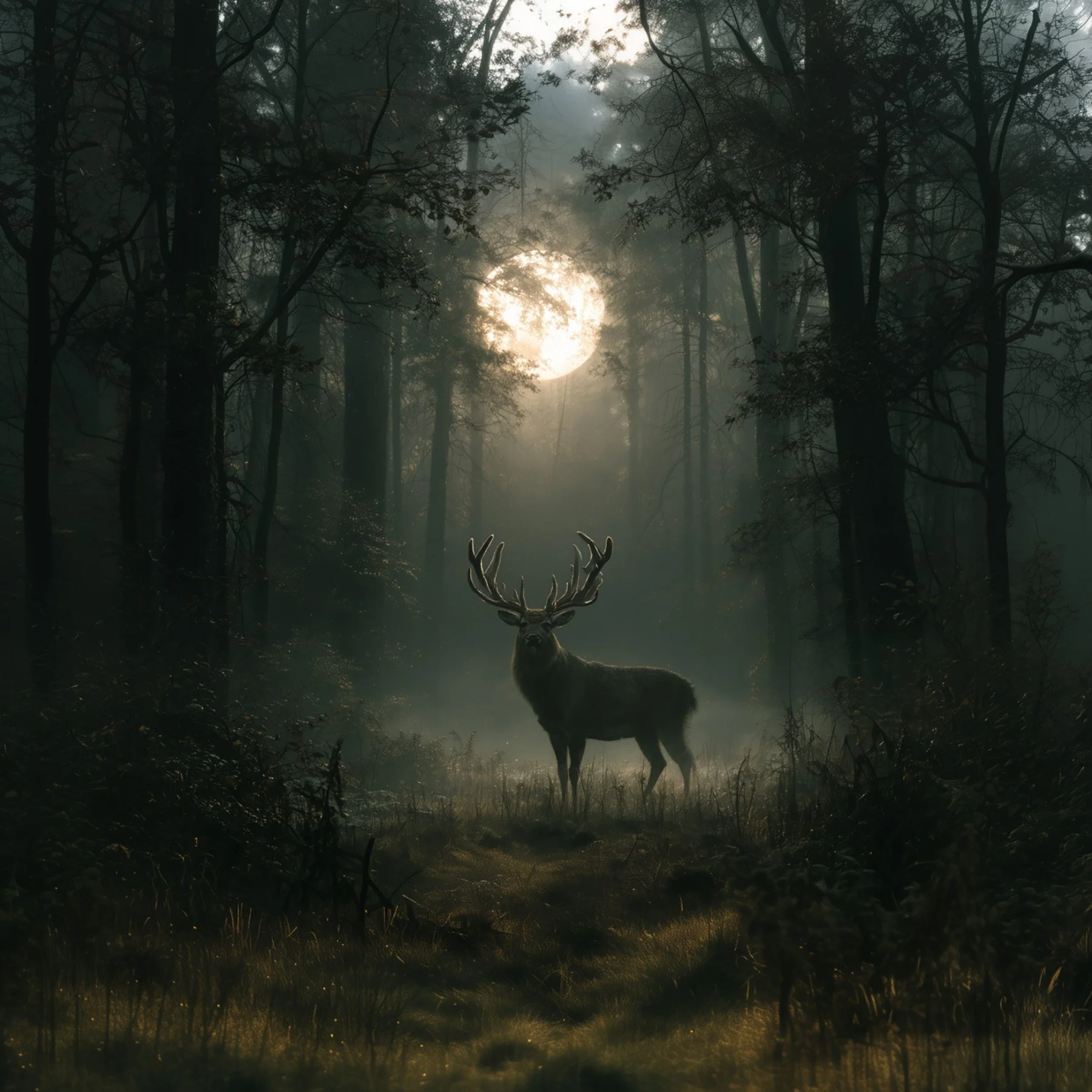
The timing feels especially fitting for the Buck Moon. At this point in the summer, bucks are rapidly regrowing their antlers, one of the fastest examples of regeneration found in the natural world. Every year, the antlers that were shed are replaced. Nature doesn’t cling to the previous season because it can’t. It grows into the next one. There’s something quietly reassuring about that. The natural world has always understood what we so often resist: growth requires change, and change rarely happens without leaving something behind. Just a few days later, on August first we arrive at Lughnasadh, the first harvest festival in the Wheel of the Year. After a month defined by change, clarity, and transformation, we’re reminded that every harvest begins long before the grain is gathered. We reap what we’ve been tending, whether consciously or not.
Maybe that’s why I’ve come to appreciate these lunar rhythms so much. They don’t tell me what will happen next, but they do encourage me to pause long enough to notice what already has. They remind me that change is rarely sudden, even when it feels that way. More often it’s been unfolding quietly for weeks, months, or even years, waiting for the right moment to step into the light.